Death as rest
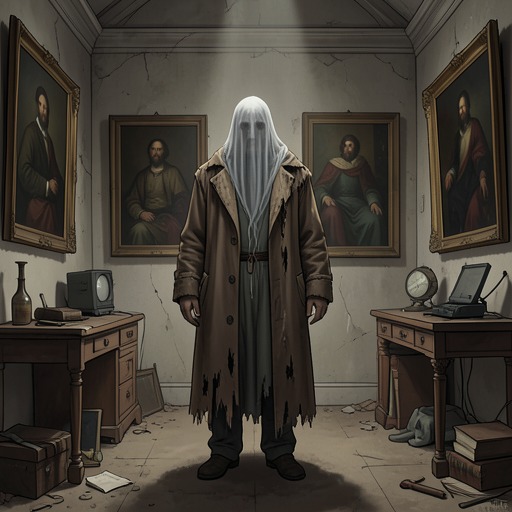
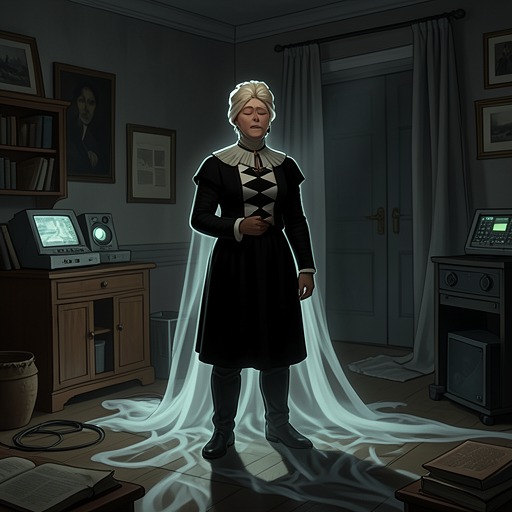
The Canterville GhostDeath as rest is the consoling vision Sir Simon de Canterville offers Virginia Otis after centuries without sleep: death becomes not merely an ending, but release from exhaustion, time, and the burden of continued existence. His longing gives Virginia a new understanding of mortality, and her compassion helps transform the ghost’s restless state into peace.
The exhaustion behind the vision
Sir Simon’s account begins with a need that Virginia initially finds difficult to understand. He pleads with her not to leave because he is lonely and unhappy, and says he wants to sleep but cannot. Virginia answers practically: going to bed and blowing out a candle should be enough. Her response exposes the gulf between ordinary human experience and the ghost’s condition; what seems effortless to her has been denied to him for three hundred years.
When Sir Simon explains that he has not slept for three centuries, Virginia’s wonder gives way to gravity. She kneels beside him and looks up into his withered face, asking whether he has any place where he can sleep. The exchange changes the terms of the haunting. Instead of meeting a frightening apparition with mockery or a remedy, Virginia recognizes an exhausted, unhappy being and asks what kind of rest remains possible to him.
The Garden of Death
Sir Simon describes a garden beyond the pine woods: long, deep grass; the white flowers of hemlock; a nightingale singing through the night; a cold, bright moon; and a yew tree spreading its branches over those who sleep beneath it. The image is composed of stillness and natural shelter. Its details turn death from an abstraction into a place, imagined as a quiet refuge beyond the restless life the ghost has endured.
Virginia recognizes the place as the Garden of Death. Sir Simon confirms that he means death, and describes lying in soft brown earth beneath waving grasses, listening to silence, and having neither yesterday nor tomorrow. To forget time and life is, in his account, to become peaceful. The garden’s natural imagery makes that peace intimate and concrete: the earth receives the sleeper, vegetation covers the grave, and night gives way to silence rather than fear.
Love as the passage to peace
Sir Simon does not present release as something he can achieve alone. He asks Virginia to open the portals of death’s house and appeals to the love he says is always with her, declaring that love is stronger than death. His words make compassion the means by which rest can become possible. Virginia trembles and falls silent, feeling as if she were in a terrible dream; the request is therefore not an easy or casual one, but a threshold she must confront.
The later funeral gives the ghost’s imagined garden a concrete echo. Four days after the events that precede it, a procession leaves Canterville Chase at about eleven at night. At the churchyard grave beneath the old yew tree, Virginia lays a large cross of white and pink almond blossoms on the coffin. The moon appears from behind a cloud, and a nightingale sings from a distant copse. Virginia remembers Sir Simon’s description of the Garden of Death, and her tears and silence connect the burial ceremony to the refuge he had pictured. The scene does not simply repeat his imagery: it places remembrance, mourning, and a living gesture of care beside the grave.
What death comes to mean
Virginia later tells Cecil, Duke of Cheshire, that Sir Simon made her see what life is, what death signifies, and why love is stronger than both. She refuses to disclose the secret she keeps, but her explanation establishes that her encounter with the ghost has altered her understanding. Death as rest is thus not only Sir Simon’s wish; it becomes part of what Virginia learns through her relationship with him.
The idea also changes the emotional shape of the story’s haunting. Sir Simon’s three hundred years without sleep make continued existence a condition of fatigue and loneliness, while his garden imagines the opposite: an end to time’s succession and a peace beyond the demands of life. The account does not reduce death to a simple escape, since Virginia shudders at the request to help him reach it. Instead, the contrast between her fear and her compassion gives the vision its force: rest can be longed for, but its passage requires a human act of understanding and love.